
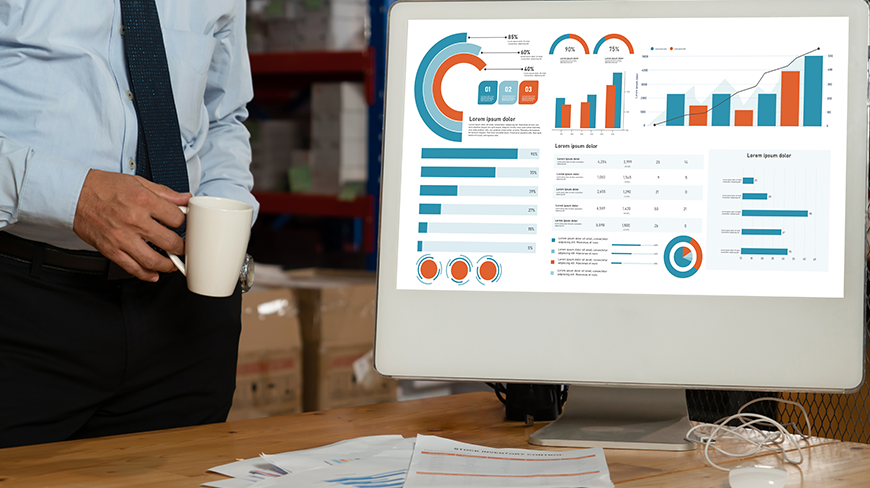
In today’s data-driven business environment, real-time visibility is critical for making informed decisions. An ERP system does more than automate operations—it provides powerful insights through reports and dashboards that help business owners stay in control.
With PiERP, businesses gain access to intelligent, real-time reports that highlight financial health, sales performance, inventory status, and operational efficiency. Tracking the right ERP reports weekly ensures faster decisions, reduced risks, and improved profitability.
Here are the Top 5 ERP Reports every business owner should track weekly to keep their organization on the right path.
1. Sales Performance Report
The Sales Performance Report gives a clear overview of how your business is generating revenue.
Why it matters:
- Identifies top-performing products, services, and sales teams
- Tracks weekly revenue trends
- Helps spot sales gaps early
What PiERP provides:
PiERP’s Sales Module delivers real-time sales analytics, including order status, invoices, customer segmentation, and sales pipeline tracking.
2. Cash Flow & Financial Summary Report
Cash flow is the lifeline of any business. This report ensures you know where money is coming from and where it’s going—every week.
Why it matters:
- Tracks incoming and outgoing cash
- Monitors outstanding receivables and payables
- Prevents liquidity issues
What PiERP provides:
With PiERP’s Finance & Accounting Module, business owners can monitor profit & loss, cash flow, expenses, and tax liabilities in one unified dashboard.
Explore: Finance & Accounting in PiERP
3. Inventory Stock & Movement Report
Overstocking ties up capital, while stock shortages lead to lost sales. The Inventory Report helps strike the right balance.
Why it matters:
- Tracks stock levels and fast-moving items
- Reduces dead stock and wastage
- Supports demand forecasting
What PiERP provides:
PiERP’s Inventory Management Module offers real-time stock visibility, batch tracking, reorder alerts, and warehouse-level reporting.
Read more: Inventory Management with PiERP
4. Purchase & Vendor Performance Report
This report evaluates how efficiently your procurement process is running.
Why it matters:
- Monitors purchase costs and supplier reliability
- Identifies delayed deliveries or quality issues
- Helps negotiate better vendor terms
What PiERP provides:
With PiERP’s Procurement Module, businesses can track purchase orders, vendor performance, delivery timelines, and procurement costs—all from one dashboard.
Discover: Procurement Management in PiERP
5. Employee Productivity & Operations Report
People and processes drive growth. This report highlights how effectively your teams and operations are performing.
Why it matters:
- Tracks employee productivity and task completion
- Identifies workflow bottlenecks
- Improves accountability and efficiency
What PiERP provides:
PiERP integrates HR, task management, and operational reporting to give leadership a clear view of workforce performance and operational health.
Learn more: HR & Operations with PiERP
Why Weekly ERP Reporting Is Crucial
Weekly ERP reporting allows business owners to:
- Act before small issues become big problems
- Stay aligned with short-term goals
- Make faster, data-backed decisions
- Improve cross-department coordination
With PiERP’s customizable dashboards, reports are available in real time—eliminating manual data collection and spreadsheet dependency.
Conclusion:
Tracking the right ERP reports weekly empowers business owners with clarity, control, and confidence. From sales and cash flow to inventory, procurement, and employee productivity, these insights form the foundation of sustainable growth.
PiERP brings all these critical reports together in one powerful, user-friendly platform—helping businesses reduce risks, improve efficiency, and scale smarter.
If you want complete visibility into your business performance, PiERP is the ERP solution designed for you.
Get started with PiERP today: