
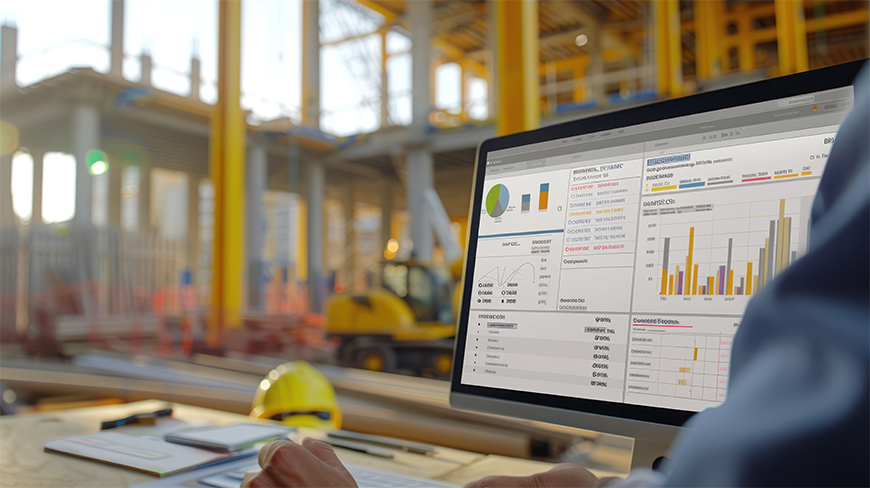
In the construction industry, budget overruns and inaccurate forecasting are among the biggest challenges companies face. From fluctuating material prices to labor cost variations and project delays, even minor miscalculations can significantly impact profitability.
This is where Construction ERP becomes a game-changer.
Modern construction companies are turning to integrated ERP systems like PiERP Construction ERP to gain complete financial visibility, ensure accurate budgeting, and improve project forecasting.
Let’s explore how Construction ERP transforms budgeting and forecasting from guesswork into data-driven precision.
Why Budgeting and Forecasting Are Challenging in Construction
Construction projects involve multiple moving parts:
- Material procurement
- Labor management
- Equipment allocation
- Contractor coordination
- Site expenses
- Project timelines
When these components are managed in separate systems (or worse, spreadsheets), errors become inevitable.
Common problems include:
- Cost overruns due to delayed updates
- Inaccurate material requirement planning
- Miscalculated labor budgets
- Lack of real-time project cost tracking
- Poor cash flow management
Without centralized data, forecasting becomes reactive instead of proactive.
How Construction ERP Enables Accurate Budgeting
A specialized solution like PiERP Construction ERP Software integrates all financial and operational data into one platform.
Here’s how it improves budgeting accuracy:
1. Real-Time Cost Tracking
Construction ERP provides live tracking of:
- Material consumption
- Labor hours
- Equipment usage
- Subcontractor costs
This allows project managers to compare actual vs. budgeted costs instantly and take corrective action before overruns happen.
2. Integrated Procurement and Inventory Control
Material price fluctuations heavily impact project budgets.
With ERP:
- Purchase orders are linked to project budgets
- Inventory levels are monitored in real time
- Excess ordering and wastage are minimized
This reduces hidden costs and improves material budgeting accuracy.
Learn more about smart procurement solutions on the PiERP website.
3. Automated Financial Reporting
Manual reporting often leads to outdated numbers.
Construction ERP generates:
- Budget variance reports
- Cost-to-complete analysis
- Work-in-progress (WIP) reports
- Profitability reports
With automated dashboards, finance teams and project managers operate on the same accurate data.
The Role of Construction ERP in Project Forecasting
Accurate forecasting requires predictive insights — not assumptions.
Here’s how ERP enhances forecasting:
1. Historical Data Analysis
ERP systems store data from past projects, including:
- Cost trends
- Vendor pricing history
- Labor productivity rates
- Equipment maintenance costs
This historical intelligence helps create more realistic future forecasts.
2. Predictive Cost Estimation
With centralized cost data, ERP enables:
- Future cash flow projections
- Phase-wise cost forecasting
- Revenue recognition tracking
Companies can plan resources more efficiently and avoid financial bottlenecks.
3. Risk Identification
Early detection of:
- Budget deviations
- Delayed procurement
- Labor shortages
Helps project teams adjust before the issue escalates.
Benefits of Using PiERP for Construction Companies
Choosing the right ERP matters. PiERP is built specifically for construction businesses in India and addresses industry-specific needs.
Key Benefits:
- Centralized financial control
- Real-time project monitoring
- Better coordination between site and head office
- Improved compliance and audit readiness
- Data-driven decision-making
- Reduced budget overruns
Explore complete features at: https://pierp.software/features
Real-World Impact: From Reactive to Proactive Management
Without ERP:
- Budget decisions are delayed
- Forecasting is manual and error-prone
- Financial visibility is fragmented
With PiERP:
- Financial control becomes structured
- Forecasting is automated and data-backed
- Management gains complete project clarity
The result? Higher profitability, improved project completion rates, and stronger financial discipline.
Why Construction Companies in India Need ERP Now
The construction industry is becoming:
- More competitive
- More regulated
- More cost-sensitive
Traditional management methods are no longer sufficient.
Digital transformation through solutions like PiERP Construction ERP ensures:
- Scalable growth
- Cost optimization
- Improved forecasting accuracy
- Long-term sustainability
Final Thoughts
Accurate budgeting and forecasting are not optional — they are critical for survival in the construction industry.
A powerful Construction ERP like PiERP turns financial management into a strategic advantage rather than a constant challenge.
If you want tighter budget control, better forecasting, and improved profitability, it’s time to adopt a dedicated construction ERP system.
Start optimizing your construction projects today: https://pierp.software/